
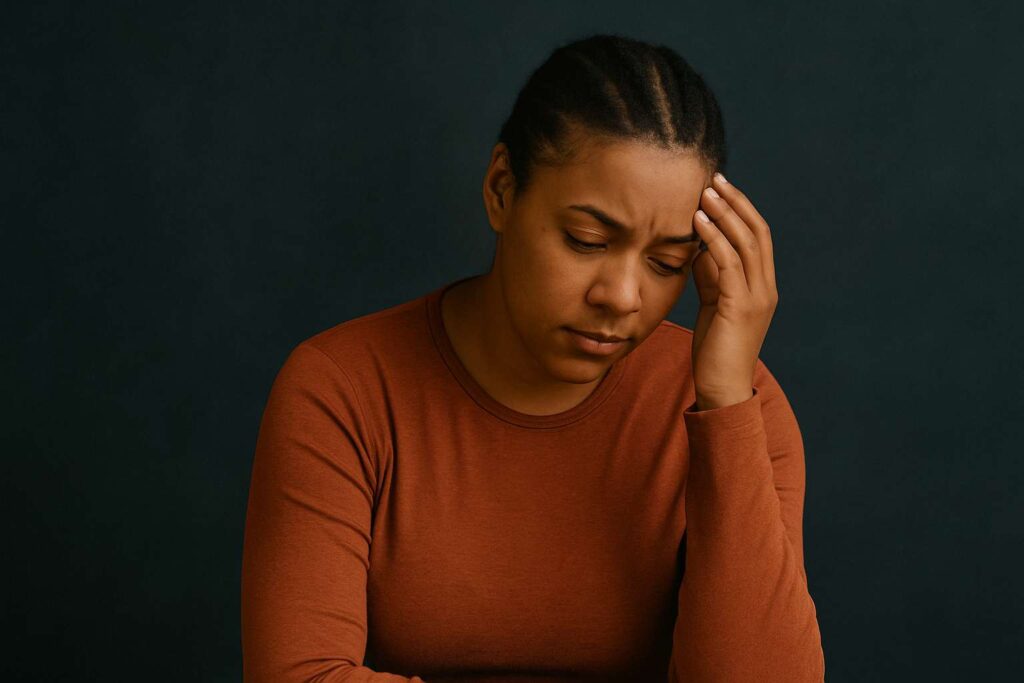
Some characters feel like strangers. Pam isn’t one of them.
When you meet her in Overcoming the Battles Within: A Love Triangle, she’s already exhausted. Not physically. Emotionally. Spiritually. She’s worn down from giving too much, too often, to people who give her crumbs in return.
But she’s still standing.
Pam is a woman in pieces—holding herself together with hope, habit, and denial. She’s the glue in her family. The voice of reason. The silent sufferer. And like many real women, she’s been taught that love means staying. Even when it hurts.
Let’s talk about her.
Not the “Strong Woman” Trope
Pam is strong, yes. But not in the flat, one-dimensional way that often shows up in stories. She isn’t bulletproof. She cries. She doubts herself. She makes mistakes. And sometimes, she says and does things that hurt others.
That’s the point.
Strength isn’t silence. It isn’t perfection. Pam’s strength is shown in her ability to feel everything and still move forward. Her courage comes from being honest about what’s broken—even if she isn’t sure how to fix it.
Her Love for Chuks
She didn’t marry a monster. She married a man who said all the right things, who had a future, who made her feel seen—at least at first.
But promises fade when they’re not backed up by actions.
Chuks isn’t just cheating on her with Sandra. He’s lying to her face while pretending everything is fine. And Pam wants so badly to believe him. That kind of gaslighting slowly chips away at your sense of reality.
You start questioning yourself.
Pam knows something’s wrong. But for a long time, she blames herself. That’s what women are often taught to do. If a man strays, it must be the woman’s fault—she wasn’t sexy enough, calm enough, grateful enough.
That lie lives in Pam’s heart for too long.
Her Daughter, Nneka
If you want to see Pam’s soul, look at how she loves her child.
Pam isn’t perfect as a mother, but she never stops trying. Even in her worst moments, Nneka stays at the center of her choices. She leaves her marriage not just for her own safety—but for Nneka’s.
And yet, even that decision tears her apart.
Nneka misses her father. She asks hard questions. She doesn’t understand why her family is breaking. And Pam has to be the one to answer, while managing her own grief.
That’s what makes her real. She doesn’t walk away without pain. She walks away with it—and keeps going.
The Velvet Betrayal
This is the deepest cut.
Velvet was supposed to be her sister-friend. Her mirror. Her protector. And yet, she became part of the same betrayal Pam feared most.
When Pam finds out the truth—that Velvet has been sleeping with Chuks and even has his child—it cracks something inside her. And still, she doesn’t scream first. She listens. She processes. She tries to keep her dignity intact.
But she breaks.
Because betrayal doesn’t always come from enemies. It often comes from people you trusted with your whole heart.
Pam’s reaction is human. And that’s what readers tell me they love most. She doesn’t bounce back with some magical line. She sits in the wreckage. And then she makes a choice.
She refuses to stay there.
Why Pam Matters
Pam is every woman who has been told to “just be patient.”
She’s every woman who found out too late that love isn’t always enough.
She’s every woman who gave more than she had and got half-effort in return.
She matters because she reminds us that pain doesn’t make you weak. Choosing yourself, even after you’ve been broken—that’s strength.
If you saw yourself in Pam, you weren’t alone. If you rooted for her, that meant something. If you cried with her, thank you.
Because her story—though fictional—is built on the truths we often hide.